
Dawson County Arrest Records and Court Charges
Arrest records begin with the law-enforcement event. In Dawson County, the Sheriff's Office and Detention Center at 19 Tucker Avenue handle the jail side for county custody, including current inmate information, bonding, and records requests routed to sheriff staff. A jail or booking record may identify the arresting agency, custody status, bond, and booking-related charges, although the official JailTracker inspection in the research did not expose a sample inmate profile or a confirmed field list.
Court charges after arrest are narrower than a complete criminal case file. The charge record starts to mature when the District Attorney or another authorized prosecutor files the formal counts in court through an accusation, indictment, or related charging paper. In Dawson County, the Northeastern Judicial Circuit District Attorney prosecutes felony cases and Dawson misdemeanor cases in the Superior Court context. The full criminal case file, plea, disposition, sentence, and probation information belong with criminal court records, while live custody and roster issues belong with inmate records.
The VINE notification system is linked from Dawson sheriff detention materials for custody-status notifications.
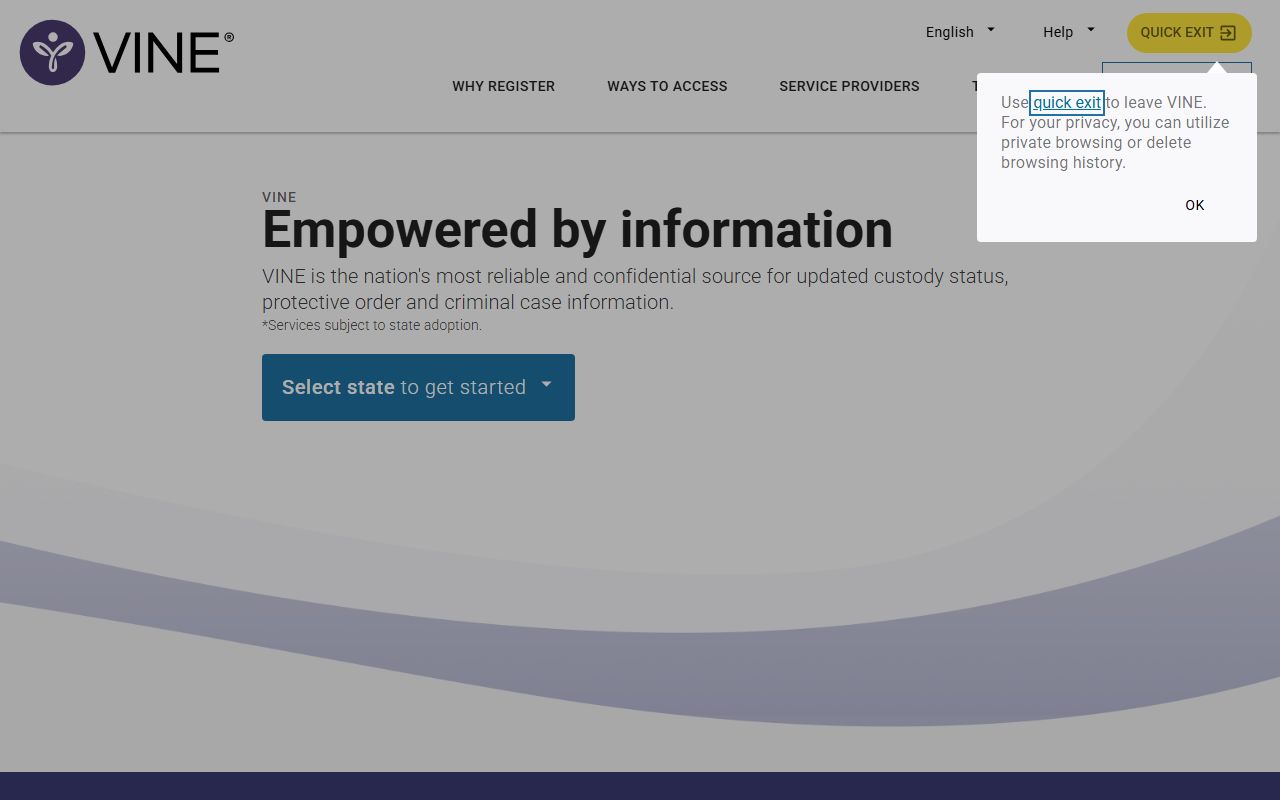
VINE can help track custody notification after an arrest, but it is not the same as a Dawson County court charge search or a final criminal disposition.
How to Find Dawson County Arrest Records and Charges
Start by separating custody information from court information. For the booking side, use the sheriff-linked JailTracker current-inmates portal or call the Dawson County Detention Center at 706-344-3535 if the roster fails to load. For filed court charges, use Georgia Courts e-access and PeachCourt for Dawson Superior Court, with the understanding that the research found an account requirement and did not confirm public field labels behind the login. If the online case cannot be found, contact the Clerk of Superior and Juvenile Courts at 25 Justice Way, Suite 1302, Dawsonville, GA 30534, or call 706-344-3510.
- Check whether the person is currently in county custody through the Dawson County JailTracker link from the sheriff detention page.
- Use the custody details as clues, then search Dawson Superior Court through Georgia Courts e-access or PeachCourt when formal charges may have been filed.
- Read the court case for the charging document, charge list, hearing events, plea, disposition, and any sentence or probation terms.
- If online records are incomplete, call the Clerk of Superior and Juvenile Courts for court records, the Detention Center for custody status, or the District Attorney at 706-344-3620 for Dawson criminal court-date routing noted in the NEJC FAQ.
Magistrate Court is also part of the arrest-to-charge path. It handles warrant applications, search warrants, first appearances, bond hearings, and preliminary hearings at 25 Justice Way, Suite 3201. Magistrate records and open-records questions can be routed to the court at 706-344-3730, and the research identifies Chief Clerk Jenny Cramblett as the Magistrate open-records contact.
How Charges Get Filed After an Arrest: Accusation, Warrant, and Indictment
An arrest does not freeze the final charges. The sheriff or arresting agency may book a person on suspected offenses, Magistrate Court may address warrants, first appearance, bond, or a preliminary hearing, and the prosecutor may later file different formal counts. Georgia terminology in the research identifies indictments as grand-jury charging documents and accusations as prosecutor-filed charging documents often used for misdemeanors or waived indictment. A warrant may authorize arrest or search activity, but it is not the same thing as a final conviction.
| Document | Who Uses It | Common Dawson Context | What to Verify |
|---|---|---|---|
| Arrest or bench warrant | Judge or court process | Magistrate warrant work, failure to appear, bond violation, or arrest authority | Issuing court, status, bond, and whether it has been served or recalled |
| Accusation | Prosecutor | Dawson misdemeanor prosecution or cases where indictment is not used | Each filed count, statute, level, and later amendments |
| Indictment | Grand jury | Felony prosecution in Superior Court | Count numbers, offense dates, charged statutes, and arraignment events |
| Disposition order | Court | End result needed for record restriction or background review | Plea, dismissal, nolle prosequi, sentence, probation, or other outcome |
Charge Status and What It Means
Charge status can change between booking and final disposition. A defendant may appear in the jail system with one listed offense, then later have a Superior Court case with additional counts, reduced counts, dismissed counts, or a prosecutor-filed accusation. NEJC materials note that the ultimate decision about charges remains with the courts, though victim input may be considered in some matters. Treat the current charge list as a stage in the case, not as proof of guilt.
| Status | What It Means | Where to Check |
|---|---|---|
| Pending | The charge remains unresolved and may still have hearings, motions, plea negotiations, or trial settings. | Superior Court case record, clerk counter, or court-date line |
| Amended / Reduced | The original count was changed, often by prosecutor action or plea agreement. | Charging document, amended accusation, plea paperwork |
| Dismissed | The court or prosecutor ended that charge without a conviction on that count. | Disposition order from the Clerk of Superior and Juvenile Courts |
| Nolle Prosequi | The prosecutor declined to continue that charge, subject to the exact order and case history. | Final disposition and docket entries |
Charges vs. Convictions
A charge is an accusation in a court file. A conviction is an outcome after a guilty plea, verdict, or other adjudication that results in guilt on a count. Dawson County users checking arrest records should not treat a booking charge, warrant allegation, or pending accusation as a conviction. For employment, licensing, housing, or other formal screening questions, verify the certified disposition with the originating court and consider Georgia record-restriction rules.
| Charge | Conviction | |
|---|---|---|
| Stage | Allegation filed or listed after arrest | Final or adjudicated result of a count |
| Proof level | Based on probable cause or prosecutor filing decisions | Requires plea, verdict, or legal adjudication |
| Record source | Booking record, warrant, accusation, indictment, or docket entry | Disposition, sentence, probation order, or judgment |
| Best Dawson office | Sheriff, Magistrate, DA, or Superior Court clerk depending on stage | Clerk of Superior and Juvenile Courts for the final court record |
Sealed vs. Expunged Records
Georgia commonly uses the term record restriction rather than expungement. The research cites O.C.G.A. 35-3-37 and the GBI record-restriction process. For arrests after July 1, 2013, GBI says there is no separate application process for many arrest restrictions and the person should contact the prosecutor. For older arrests, the person applies at the arresting agency. NEJC localizes the sequence by telling users to obtain a copy of the disposition from the Clerk of Courts, then reach out to the agency where the case originated, such as the Dawson County Sheriff's Department.
| Sealed or Restricted | Expunged | |
|---|---|---|
| Georgia wording | Record restriction is the locally supported term in the research. | Older or informal term; do not assume destruction of the record. |
| Visibility | Limits public access for eligible non-criminal-justice purposes. | May be used casually to mean restricted, but the court or agency record may still exist. |
| Dawson path | Get the final disposition, then contact the prosecutor or originating agency. | Verify with the clerk, prosecutor, or arresting agency before relying on the term. |
Charge Codes and Severity Levels
Dawson Superior Court handles felonies and many serious criminal matters. The DA's Dawson office prosecutes both felony and misdemeanor cases in Dawson County in the Northeastern Judicial Circuit context. Magistrate Court handles first appearances, bond hearings, preliminary hearings, county ordinances, warrant applications, and search warrants. A single arrest can create several separate counts, and each count may have its own statute, severity, bond condition, plea, and disposition. When a case crosses from booking to prosecution, use the filed court document rather than only the arrest label.
Statewide Charge and Criminal History Lookups
Statewide criminal-history questions are separate from the Dawson court file. Georgia's GBI record-restriction information explains how eligible criminal-history records may be restricted for non-criminal-justice purposes, often with prosecutor or agency involvement. Georgia Courts also provides self-help information for record restriction. A Dawson Superior Court disposition may be needed before asking the Sheriff's Office, prosecutor, or state agency about restriction. For current county custody, use JailTracker or the Detention Center. For state sentenced custody, use the Georgia Department of Corrections offender search. For federal custody, use the Bureau of Prisons locator.
Background Check Considerations
An arrest record, charge record, and conviction record answer different questions. A casual court lookup may show a filed case, but it may not include sealed material, restricted records, non-indexed older files, or a certified final disposition. Dawson users who need an official outcome should request the court disposition from the Clerk of Superior and Juvenile Courts, then compare it with any sheriff or state criminal-history record.
Important: This private site is not a consumer reporting agency and cannot be used for FCRA-regulated screening decisions.
Restricted Charge Records in Dawson County
Juvenile matters, adoption records, sealed criminal files, active investigations, treatment-court information, medical or substance-use treatment records, and certain warrant or search-warrant materials may be withheld or redacted. The research cites juvenile-record restrictions, HIPAA and 42 C.F.R. Part 2 for treatment-service confidentiality, and the general Georgia Open Records Act rule that public access yields when a court order or law makes a record confidential. Public access does not override a judge's sealing order or privacy statute.