
Dawson Criminal Court Records
A Dawson County criminal court record is the case-level file kept by the court after criminal charges enter the court system. It is not the same as a booking record, inmate roster entry, warrant record, or police report. The court file can include the indictment or accusation, formal charges, docket entries, motions, bond conditions, plea, verdict, disposition, sentencing order, probation revocation activity, and appeal information. The Clerk of Superior and Juvenile Courts handles Superior Court criminal filings and is the local office for copies or certified dispositions.
Superior Court is the general jurisdiction court. It has felony jurisdiction and, according to the Dawson research, the Northeastern Judicial Circuit District Attorney prosecutes both felony and misdemeanor cases in Dawson County. Magistrate Court still matters because it handles first appearances, bond hearings, preliminary hearings, warrant applications, and search warrants. Those early events may affect the criminal file even though the later prosecution and final disposition are Superior Court matters.
The Dawson County District Attorney source identifies the local prosecution office for criminal cases.
The prosecutor's role explains why charges in a court file may differ from the arrest entry. Filed counts, plea terms, dismissals, and sentencing outcomes are court-record facts.
Search Dawson Criminal Records
For online Superior Court criminal case access, start with Georgia Courts E-Access to Court Records, which lists Dawson Superior and sends users to PeachCourt. Georgia Courts states that a provider account is required to search court records after redirection. If the online path does not show the criminal case, contact the Clerk of Superior and Juvenile Courts at 706-344-3510 or visit the clerk's office in Suite 1302 at 25 Justice Way.
- Confirm that the record sought is a criminal court case file, not only an arrest, booking, warrant, or jail record.
- Use Georgia Courts E-Access and the Dawson Superior PeachCourt route for online Superior Court criminal records.
- Log in or register if the provider requires an account before search fields or documents appear.
- Read the docket for charges, motions, hearings, plea, disposition, sentence, or probation events.
- Request a certified disposition from the Clerk of Superior and Juvenile Courts when the record is needed for restriction, employment, licensing, immigration, or another official use.
State-level criminal history is different from the court case file. The Georgia Bureau of Investigation record-restriction source concerns criminal-history access and restriction under state law, while the Dawson court file comes from the local court. For a person in custody, use the Dawson County inmate record route. For an arrest-to-charge question, use the court charge record route. For open warrant risk, use the Dawson warrant record route.
The NEJC attorney source was captured for the criminal court records research because representation and prosecution status often shape the next court event.
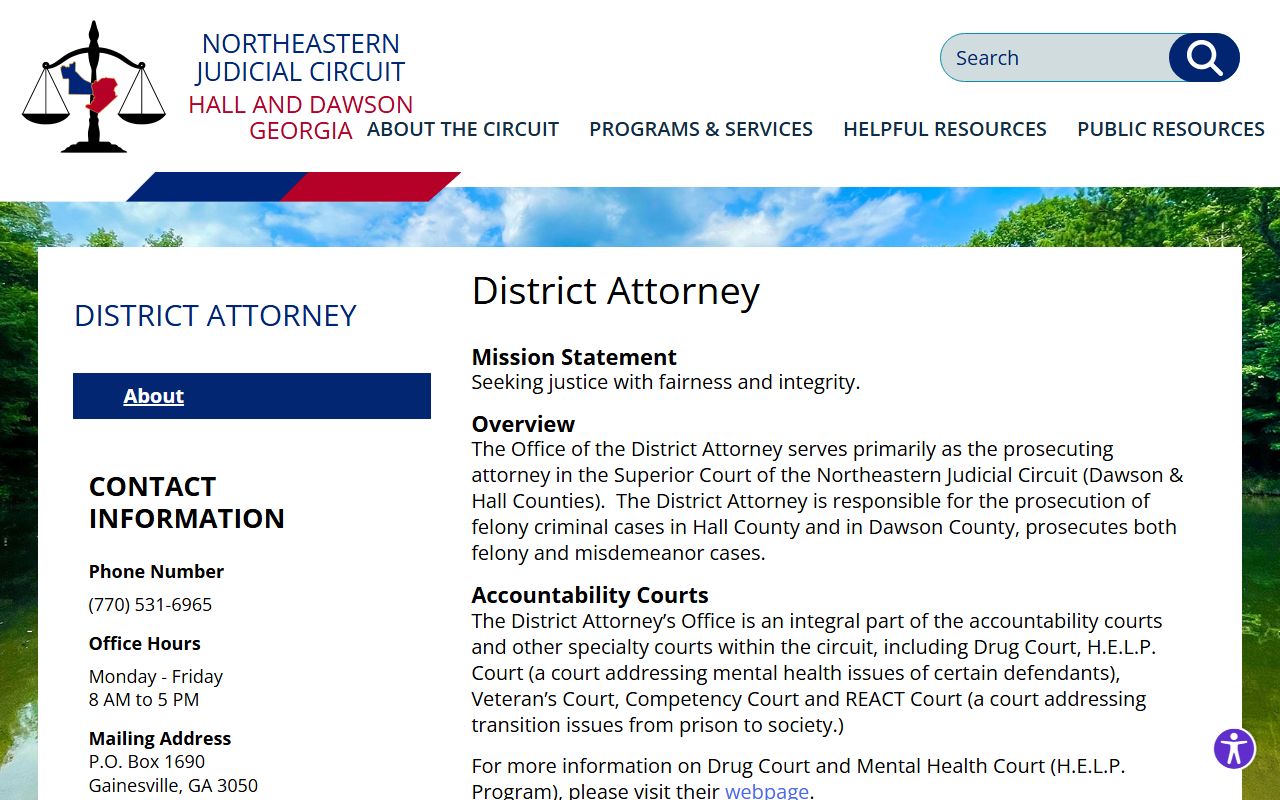
Attorney routing is practical because NEJC says a person's attorney is often the best source for what is going on with a criminal case.
Dawson Criminal Case Flow
A criminal court record grows over time. The sheriff or police side may start with an arrest, booking, or warrant. Magistrate Court may handle first appearance, bond, preliminary hearing, or warrant-related events. The District Attorney then controls prosecution decisions for Dawson Superior Court cases. Once formal charges are filed, the court record tracks arraignment, motions, hearings, plea or trial, disposition, sentence, probation, and possible appeal.
Case flow: Arrest or citation › first appearance / bond › formal charge › arraignment › pretrial motions › plea or trial › disposition › sentencing › probation or appeal activity
| Stage | What Happens |
|---|---|
| First appearance / bond | Magistrate-related activity may address rights, custody, bond, and probable cause before the case moves forward. |
| Formal charge | An indictment or accusation states the filed counts that the court case will track. |
| Arraignment | The defendant responds to the formal charge, usually by entering a plea. |
| Pretrial / motions | Attorneys file requests, notices, and legal issues before plea or trial. |
| Plea or trial | The case resolves through plea, bench or jury trial, dismissal, or other disposition. |
| Sentencing | The court enters jail, prison, probation, fine, treatment, or other sentence terms after conviction. |
Some eligible Dawson defendants may encounter accountability-court or treatment-court options. The research states that Treatment Services oversees Drug Court, DUI Court, H.E.L.P. Program, Family Treatment Court, Parental Accountability Court, Veterans Court, Dawson County Treatment Court, and Dawson County Family Treatment Court in the Hall and Dawson circuit setting. Individual participation is confidential under HIPAA, 42 C.F.R. Part 2, and state law.
What Dawson Criminal Records Show
A Dawson criminal court record can show both the timeline and the outcome of a prosecution. A docket entry may be brief. A filed document or certified copy may show the exact text of the accusation, indictment, order, plea, or sentence. When an online provider does not show a document image, the Clerk of Superior and Juvenile Courts may still be able to explain copy options, certification, retrieval, or access limits.
| Field | What It Shows |
|---|---|
| Case number | The court identifier used for docket review, clerk requests, and certified copies. |
| Defendant | The person charged in the court case, distinct from other parties, witnesses, or victims. |
| Charges | The filed criminal counts, which may differ from arrest or booking charges. |
| Plea | The defendant's formal answer, such as guilty, not guilty, or another permitted plea. |
| Bond conditions | Release terms or restrictions connected to custody and court appearances. |
| Motions and orders | Requests from attorneys and rulings from the judge during the case. |
| Disposition | The case or charge outcome, such as conviction, dismissal, acquittal, or other resolution. |
| Sentence | Jail, prison, probation, fine, treatment, or other terms ordered after conviction. |
| Probation events | Revocation filings or orders if probation compliance becomes a later court issue. |
Charges vs Convictions
A charge is an allegation that moves through the court. A conviction is a final outcome after a guilty plea, verdict, or other adjudication that results in guilt. A Dawson County criminal court record may show charges that were amended, dismissed, reduced, merged, or resolved by plea. It may also show acquittal or a not-guilty result. Do not treat the charge field as the same thing as a conviction field.
| Charge | Conviction | |
|---|---|---|
| Stage | Filed count or allegation | Final guilt outcome after plea or verdict |
| Source | Arrest, warrant, accusation, or indictment path | Court disposition and sentence record |
| Meaning | The case is alleging an offense | The court has resolved guilt on that offense |
| Record use | Useful for tracking pending or filed counts | Needed for sentence, restriction, licensing, and many official reviews |
The Sheriff's Office may have booking or custody facts, but the criminal case file is where the filed charge, plea, disposition, and sentence are documented. The DA's role also matters because NEJC research states the ultimate decision about charges remains with the courts, while the prosecutor handles the Dawson criminal prosecution path.
Dispositions and Sentences
Disposition means the result of a case or charge. In a criminal court file, it may show guilty, not guilty, dismissed, acquitted, nolle prosequi if the prosecutor does not proceed, or another court-specific result. A sentence is the punishment or supervision ordered after conviction. Dawson research identifies sentencing orders, bond conditions, probation revocations, and appeals as part of criminal Superior Court records. Sentence terms may include custody, probation, fines, conditions, treatment, or later revocation activity.
The Public Defender source identifies the Dawson office that represents eligible defendants in Superior Court criminal, probation revocation, juvenile, and appeal matters.
Defense representation affects how motions, pleas, probation revocations, and appeals appear in the criminal court file.
Sealed vs Restricted Records
Georgia research uses the term record restriction for many criminal-history access limits. Restriction limits access for non-criminal-justice purposes, but it does not necessarily destroy the record. Law enforcement and courts may still retain access. A sealed court record is hidden from public view by court order or law. The older term expungement is often used by the public, but the Dawson research notes that Georgia generally uses record restriction.
| Sealed | Restricted / Expunged Term | |
|---|---|---|
| Visibility | Hidden from ordinary public access by law or court order | Limited for non-criminal-justice purposes when approved under Georgia process |
| Record status | The file may still exist with the court | The record is not necessarily destroyed |
| Local route | Ask the Clerk about the sealing order or access authority | Get the final disposition from the Clerk, then contact the prosecutor or originating agency |
| Georgia source | Sealing can arise from statutes, privacy rules, or judge's order | O.C.G.A. 35-3-37 is the cited criminal-history restriction law |
For arrests after July 1, 2013, the GBI source says there is no application process for many restrictions and the person must contact the prosecutor. For arrests before July 1, 2013, the person applies at the arresting agency. NEJC localizes the path by telling people to obtain a copy of the disposition from the Clerk of Courts, then reach out to the agency where the case originated, such as the Dawson County Sheriff's Department.
The Georgia Courts record restriction source is the statewide self-help source captured for Dawson criminal court record restriction.
That statewide source supports the local Dawson sequence: final court disposition first, then prosecutor or originating agency review when restriction may be available.
Public Criminal Record Access
Georgia's Open Records Act, O.C.G.A. 50-18-70 et seq., presumes public records are open unless a court order or law specifically exempts them. Dawson court files can still be sealed, redacted, restricted, or unavailable online. Juvenile proceedings and records follow special restrictions under O.C.G.A. 15-11-630, 15-11-700, and 15-11-708. Uniform Superior Court Rules also recognize that e-filed court records have the same force and public-access effect as traditional filings, subject to law.
Key Statutes:
O.C.G.A. 50-18-70 et seq. - Georgia public records are presumed open unless a law or court order blocks access.
O.C.G.A. 35-3-37 - Eligible criminal-history records may be restricted for non-criminal-justice purposes.
Federal criminal cases are separate. The U.S. Attorney's Office for the Northern District of Georgia source belongs to federal prosecution, not Dawson Superior Court prosecution.
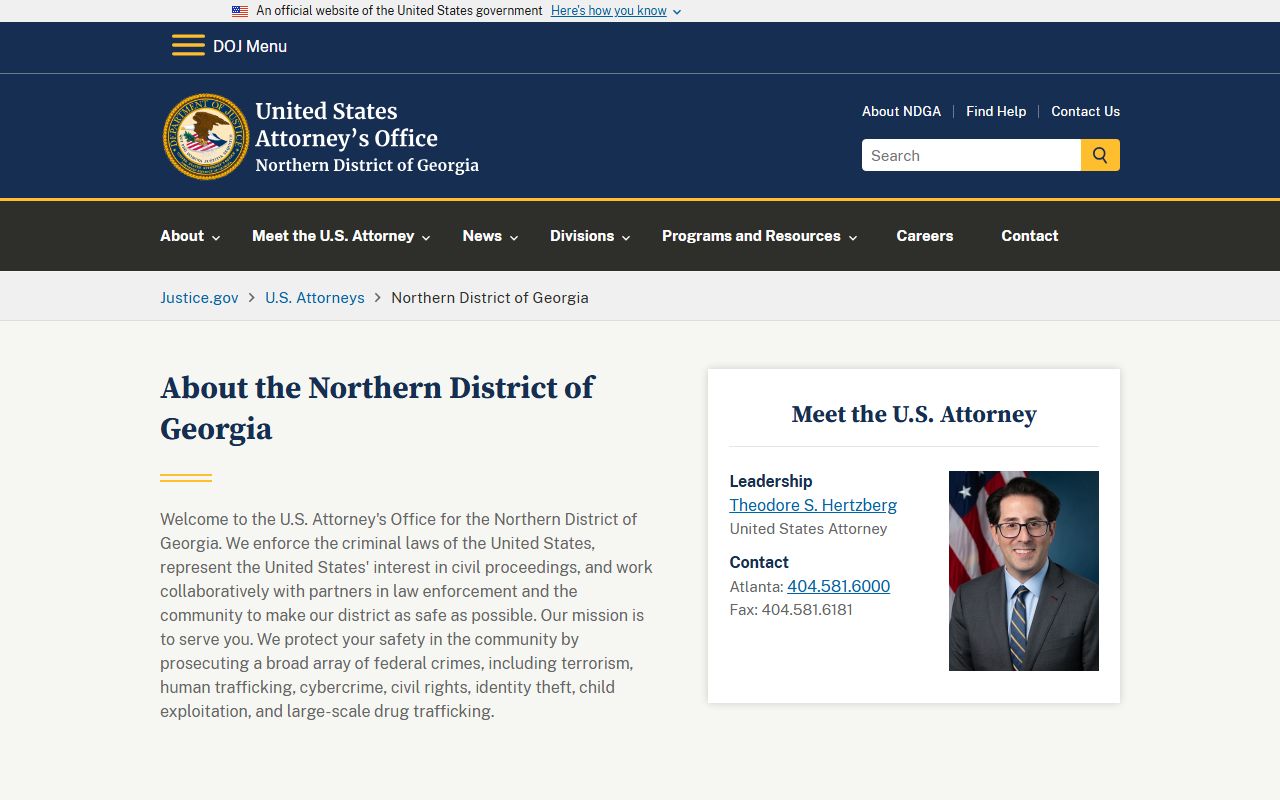
Use federal court and PACER channels for federal prosecutions. Use Dawson Superior Court and the local clerk for Dawson County criminal case files.
Background Check Limits
A court record lookup is not the same as a regulated background check. A Dawson criminal court file may show charges, outcomes, and sentences, but it may not include every arrest, every state criminal-history entry, or later access restriction. Employers, landlords, insurers, lenders, and others covered by the Fair Credit Reporting Act need legally compliant consumer-reporting procedures rather than casual court searches.
Important: Dawson criminal court records should be verified with the court or official agency before any legal or regulated use.
Restricted Dawson Criminal Records
Juvenile delinquency, unruly, dependency, and juvenile traffic diversion records are not ordinary adult public files. Adoption records are restricted because they involve minors and family privacy. Search-warrant materials, active investigations, victim information, medical or treatment records, and minor identifying information may be withheld or redacted. Accountability-court treatment services are confidential under HIPAA, 42 C.F.R. Part 2, and state law. A public docket may omit or mask those details even when a case exists.
For a Dawson restriction request, the practical starting point is the final court disposition. Contact the Clerk of Superior and Juvenile Courts for the disposition, then follow the prosecutor or originating agency route described by the GBI and NEJC research. If the matter began with the Dawson County Sheriff's Office, that agency may be part of the older-arrest restriction path. If it was prosecuted in Dawson Superior Court, the DA's Dawson office is the local prosecution contact.